
A major winter storm is brewing and could impact millions across the country. As temperatures drop and snow and ice move in, it’s important to think ahead — not just about travel and home safety, but also about protecting your health and the well-being of your pets.
Snow Shoveling: Know Your Limits
When winter storms hit, many people reach for a shovel — but snow shoveling can be dangerous, especially for your heart. The physical strain of lifting heavy, wet snow in cold temperatures significantly increases the risk of heart attack.
Some doctors recommend that people 65 and older avoid shoveling altogether, while others suggest the risk begins much earlier — around age 45. Studies show that nearly 85% of adults over 50 have some level of plaque buildup in their arteries, increasing the risk of coronary artery disease.
If you must shovel and don’t have someone who can help, the American Heart Association recommends:
- Start slowly and pace yourself
- Dress warmly, covering your mouth and nose, and wear a hat and gloves
- Push or sweep snow instead of lifting and throwing it
- Be especially cautious on windy days, as wind chill intensifies cold exposure
- Use a snow blower if possible
If you experience chest pain, shortness of breath, or dizziness, stop immediately and seek medical attention.
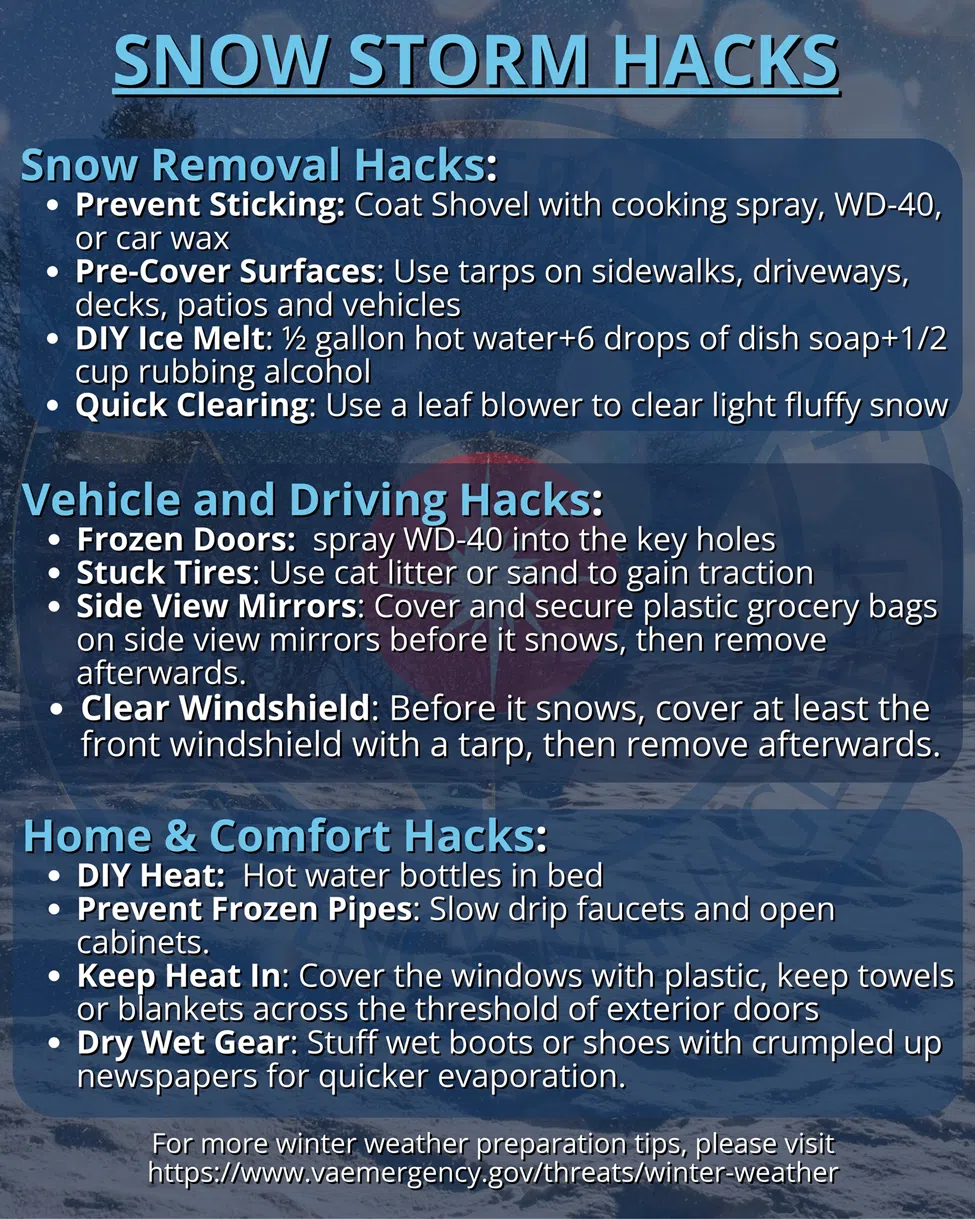
Prepare Your Vehicle Before the Storm
AAA urges drivers to weatherize their vehicles before winter storms arrive — and especially before heavy snow or ice. Taking a few minutes now could save you in an emergency.
Before the storm, check:
- Oil levels
- Headlights and taillights
- Windshield wiper fluid
- Tire pressure and tire tread
It’s also essential to carry an emergency kit in your vehicle. This kit should include:
- A flashlight
- Warm clothing or blankets
- Food and water
- Phone chargers and batteries
- Salt, cat litter, or sand to help gain traction on snow or ice
Pet Safety in Cold Weather
Cold weather can be just as dangerous for pets as it is for people. Limit outdoor time during extreme cold, and wipe off your pet’s paws and coat when they come inside to remove ice, salt, and chemicals that can irritate skin or be harmful if ingested.
Use pet-safe salt on walkways, and keep pets away from space heaters, fireplaces, and other hot surfaces to prevent burns. Before starting your car, check underneath and around the engine area — cats may seek warmth there during cold weather.
Never leave pets unattended in vehicles during winter, and ensure outdoor pets always have access to shelter, fresh water that won’t freeze, and protection from wind and moisture.
- Animals who are left outdoors in the cold can suffer from frostbite and exposure, and dogs who are kept tethered can become tangled and die when they’re unable to reach food, water that’s not frozen over, or properly insulated shelter.
- Coats will keep dogs comfortable in cold weather (just be sure to remove wet jackets the moment dogs return home), secure harnesses can help prevent them from getting loose on walks, and booties will protect their sensitive paw pads from the frozen ground. Keep walks short in cold weather, especially for short-haired dogs.
- Don’t forget birds: During extreme winter weather, you can provide birds and other wild animals with access to an emergency water supply by filling a heavy nonmetal water bowl (tongues can freeze to metal) and breaking the surface ice at least twice a day.
Prevent Frozen Pipes at Home
Frozen pipes can cause serious damage and costly repairs. Preparing now can help protect your home — and your pets — during freezing temperatures.
Before cold weather sets in, the American Red Cross recommends:
- Drain swimming pool and sprinkler supply lines according to manufacturer instructions
- Remove, drain, and store outdoor hoses
- Close inside valves supplying outdoor hose bibs and open outside valves to drain remaining water
- Add insulation to attics, basements, and crawl spaces
- Insulate water supply lines in unheated areas like garages and under cabinets
- Consider using pipe sleeves, heat tape, or heat cables on exposed pipes
During freezing weather:
- Keep garage doors closed if water supply lines run through them
- Open kitchen and bathroom cabinet doors to allow warm air to circulate around plumbing (and move harmful cleaners out of reach of children and pets)
- Let cold water drip slightly from faucets connected to exposed pipes
- Keep your thermostat set to the same temperature day and night to reduce the risk of pipes freezing and bursting
Stay Safe and Look Out for One Another
Several organizations in the region offer services to ensure everyone’s safety during harsh winter conditions. For individuals experiencing homelessness, there are resources available to find emergency shelter and support.
Regional Housing Crisis Hotline
The Regional Housing Crisis Hotline serves as a central point of contact for those facing a housing crisis throughout Greater Hampton Roads. By calling the hotline, individuals can receive referrals to appropriate shelters, case management, and related services.
- Phone: (757) 587-4202
- Hours: Monday – Friday, 8 a.m. – 7 p.m.
PORT Emergency Winter Shelter
Operated by LINK of Hampton Roads, the PORT (People Offering Resources Together) Emergency Winter Shelter provides shelter, dinner, and breakfast during the coldest months. The shelter rotates weekly among different churches in the area from November through March.
- Location: Rotating church sites
- Details: No referral needed. Shelter operates from 7 PM to 7 AM. Guests are provided with meals and a safe place to sleep but must carry their belongings during the day.
- Contact: LINK of Hampton Roads
10413 Warwick Blvd.
Newport News VA 23601757-595-1953
Email
https://www.linkhr.org/port-shelter
A Night’s Welcome
Coordinated by HELP, Inc., “A Night’s Welcome” is a nightly winter shelter program that collaborates with over 30 area churches to provide a warm and safe environment. The shelter operates from November through March, offering two hot meals and a place to sleep.
- Location: Rotating church sites
- Guest Arrival: 6 PM – 9 PM; dinner served at 6:30 PM
- Contact: (757) 723-2242
- Details: Guests are provided with meals and shelter but must leave during daytime hours.https://helphampton.org/anightswelcome/
Chesapeake Area Shelter Team (C.A.S.T.)
Chesapeake Area Shelter Team is a community of faith-based organizations, who come together to provide Emergency Overnight Winter Shelter for people experiencing homelessness in the city of Chesapeake in church buildings and occasionally at the Chesapeake Cares Resource Center.
Each scheduled week of CAST, there is one church location for homeless guests to receive shelter, meals, resources and fellowship. The Chesapeake Cares Resource Center is an intake site (off-site from church) where guests are cleared for the CAST program then transported by a CAST-arranged bus. Homeless in their own cars are also welcomed to the intake process and follow the bus to the host church. Police presence ensures a safe environment. Rules include no drinking, no drugs, no sex offenders (database checked).
Contact C.A.S.T. for more information on how to become a volunteer or a host church or organizations. Volunteer bus drivers with a CDL P are especially needed.
- Phone: 757-321-9353
- Email: sam.cast@abbalist.org
- Website: cast.abbalist.org/
Virginia Beach Housing Resource Center
The Virginia Beach Housing Resource Center is a comprehensive facility offering shelter, housing, health services, dining, and supportive resources for families and individuals experiencing homelessness or a housing crisis.
- Location: 104 N. Witchduck Road, Virginia Beach, VA
- Contact: (757) 385-5167
- Details: Services include emergency shelter, housing assistance, health center access, and more. citeturn0search1
Union Mission Ministries
Union Mission Ministries offers emergency shelter and life-saving programs, providing a safe haven, hot meals, clean clothing, and job- and life-skills training to men, women, and children in need.
- Contact: (757) 627-8686
- Details: Call to check shelter availability and services.
Samaritan House
Samaritan House provides emergency and permanent housing solutions for individuals and families experiencing homelessness or at risk of losing their homes.
- Contact: (757) 587-4202 (Regional Housing Crisis Hotline)
- Details: Hotline staff will assess your situation and connect you with appropriate services.
Salvation Army Men’s Hope Center
The men’s Emergency Shelter and Soup Kitchen provides food, shelter, resources, and prayer for hundreds of struggling men in the Hampton Roads area. The men’s shelter is open 365 nights a year and offers 14 weekly soup kitchens.
- Location – 203 West 19th Street, Norfolk, VA
During severe winter weather, it’s essential to seek shelter promptly to protect yourself from the dangers of cold exposure. If you or someone you know is in need of assistance, please reach out to these resources to find the support necessary to stay safe and warm.
Additionally, during extreme cold or heat, many libraries and community center lobbies are open to the public as warming or cooling centers. These facilities provide a safe space for residents to escape severe weather conditions. For the latest updates and locations, it’s advisable to monitor local news outlets or contact the city’s 311 call center.
Please note that availability and operating hours of these shelters may vary, especially during severe weather events. It’s recommended to contact the organizations directly or visit their websites for the most current information.
Please check on neighbors, elderly family members, and pets during extreme cold — and remember that if conditions are unsafe for you, they’re unsafe for animals too.
Stay warm, stay prepared, and stay safe.

Comments